Gay Massage: What to Expect and How to Vet a Provider
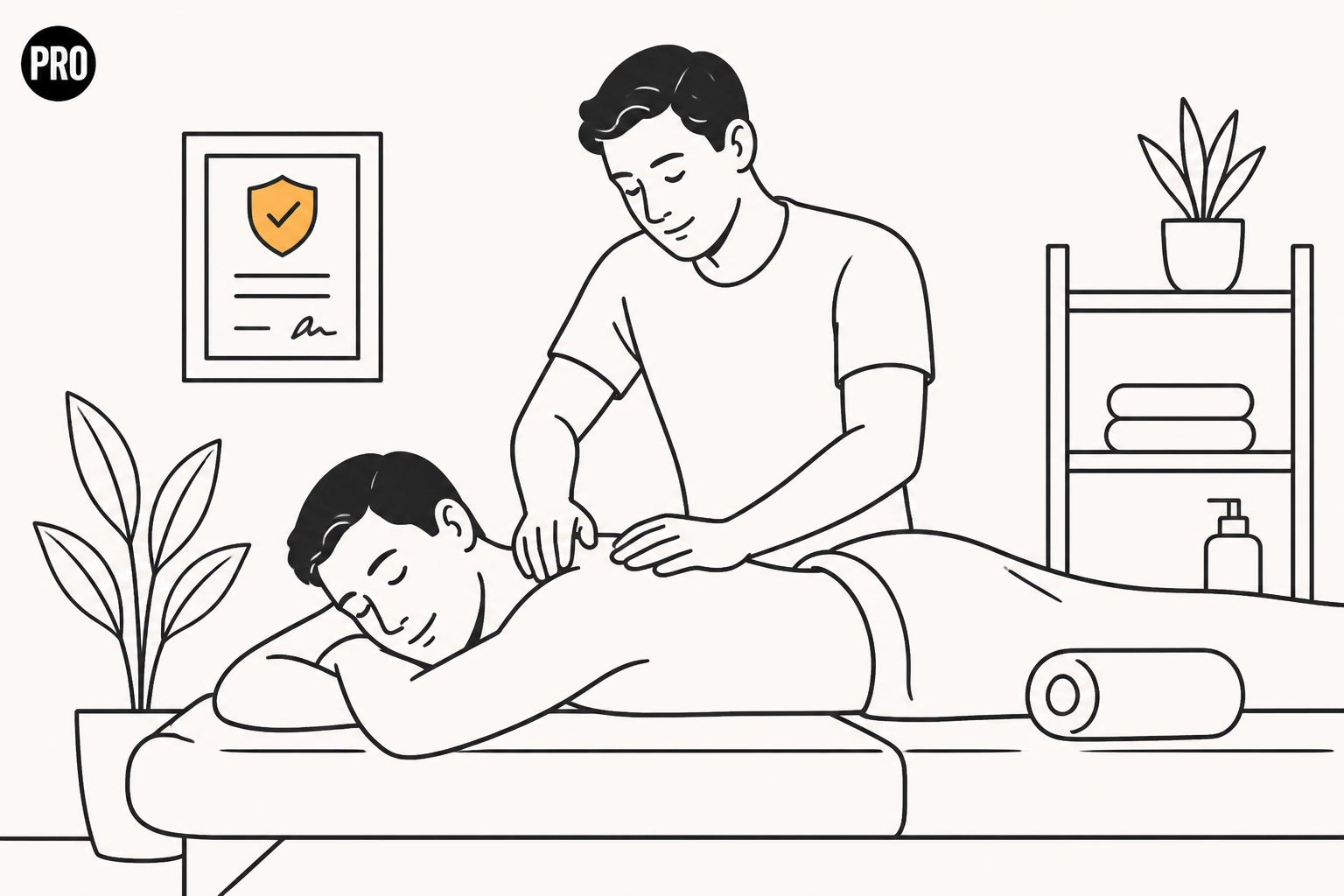
Learn what gay and M4M massage involves, why state licensing matters, and how to vet and book a male bodywork provider safely.
Booking your first gay massage can feel both exciting and uncertain. You want skilled male bodywork, clear communication, and a provider who respects your boundaries. The problem is that listings, terms, and state rules vary widely, and beginners often do not know what to ask or what a professional session should look like.
This guide explains gay and M4M massage from the ground up. You will learn what those terms actually mean, the male bodywork styles you will see listed, why state licensing matters, and how regulation works across licensing, businesses, and advertising. Licensing is handled at the state level, so requirements can differ depending on where you book. You will get a practical provider vetting checklist before you book, plain definitions for in-call and out-call, guidance on boundaries, consent, and handling problems, and questions to ask before you confirm a session. We also cover pricing, deposits, and payment expectations, etiquette for a professional session, frequently asked questions, and takeaways for your next booking. By the end, you will know how to evaluate a provider with confidence and choose a session that feels safe, respectful, and appropriate for your needs.
What Gay and M4M Massage Actually Means
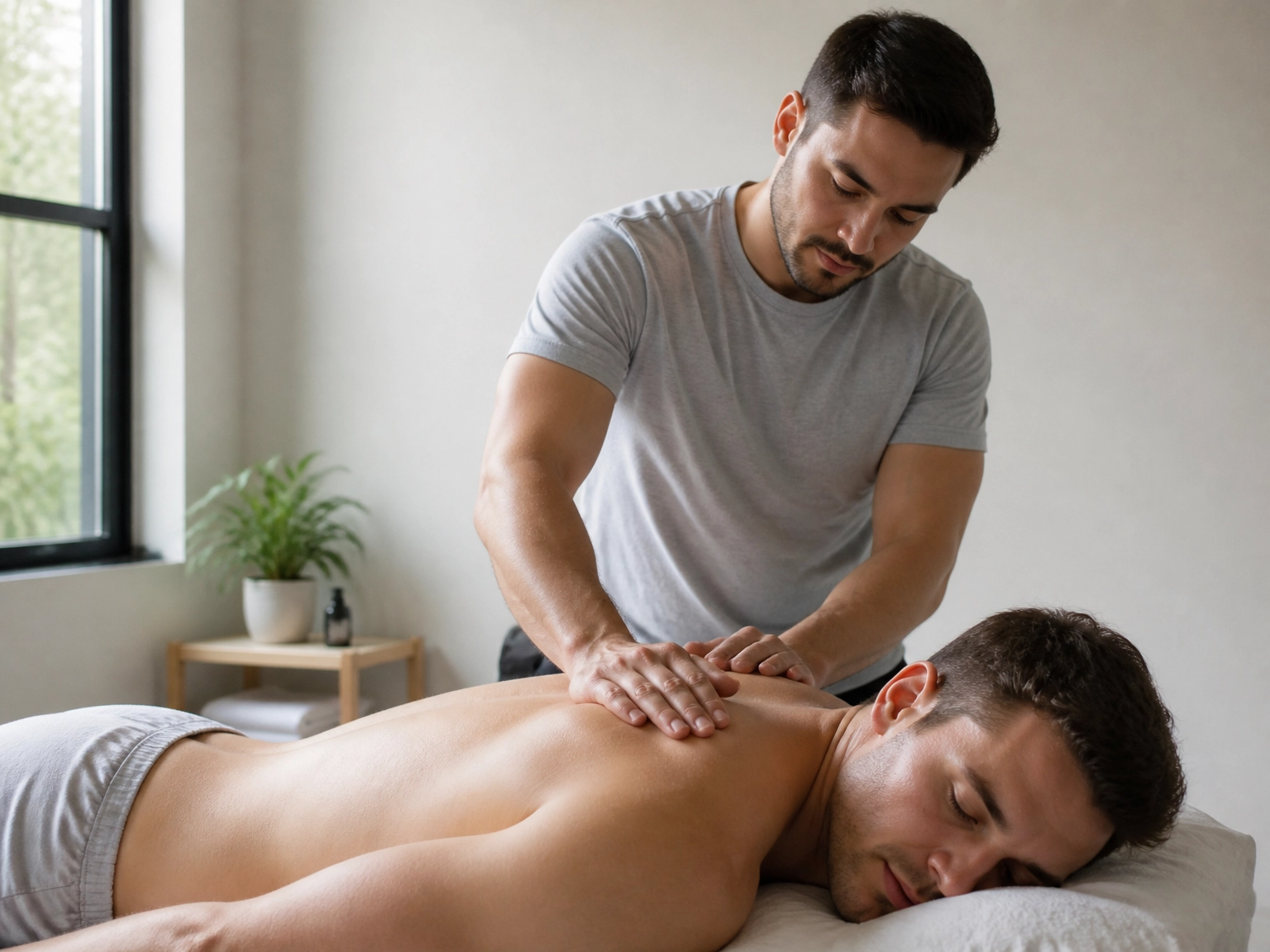
M4M, short for male for male, describes bodywork performed by a male provider for a male client. "Gay massage" is the common search phrase for that category, not a separate license type or clinical modality. Licensing, where states issue it, covers massage therapy or bodywork generally, so the label describes the audience and provider rather than the credential.
Regulation varies sharply by state and provider. Licensed therapeutic practice sits inside a state's massage therapy rules; unregulated arrangements do not, and that gap changes your questions, your risk, and your recourse. The terms themselves are worth reading once before you start comparing what providers actually offer.
Male Bodywork Styles You Will See Listed
Listings broadly split into therapeutic and clinical work, relaxation-focused sessions, and sensual or erotic services, which fall outside licensed therapy in most states.
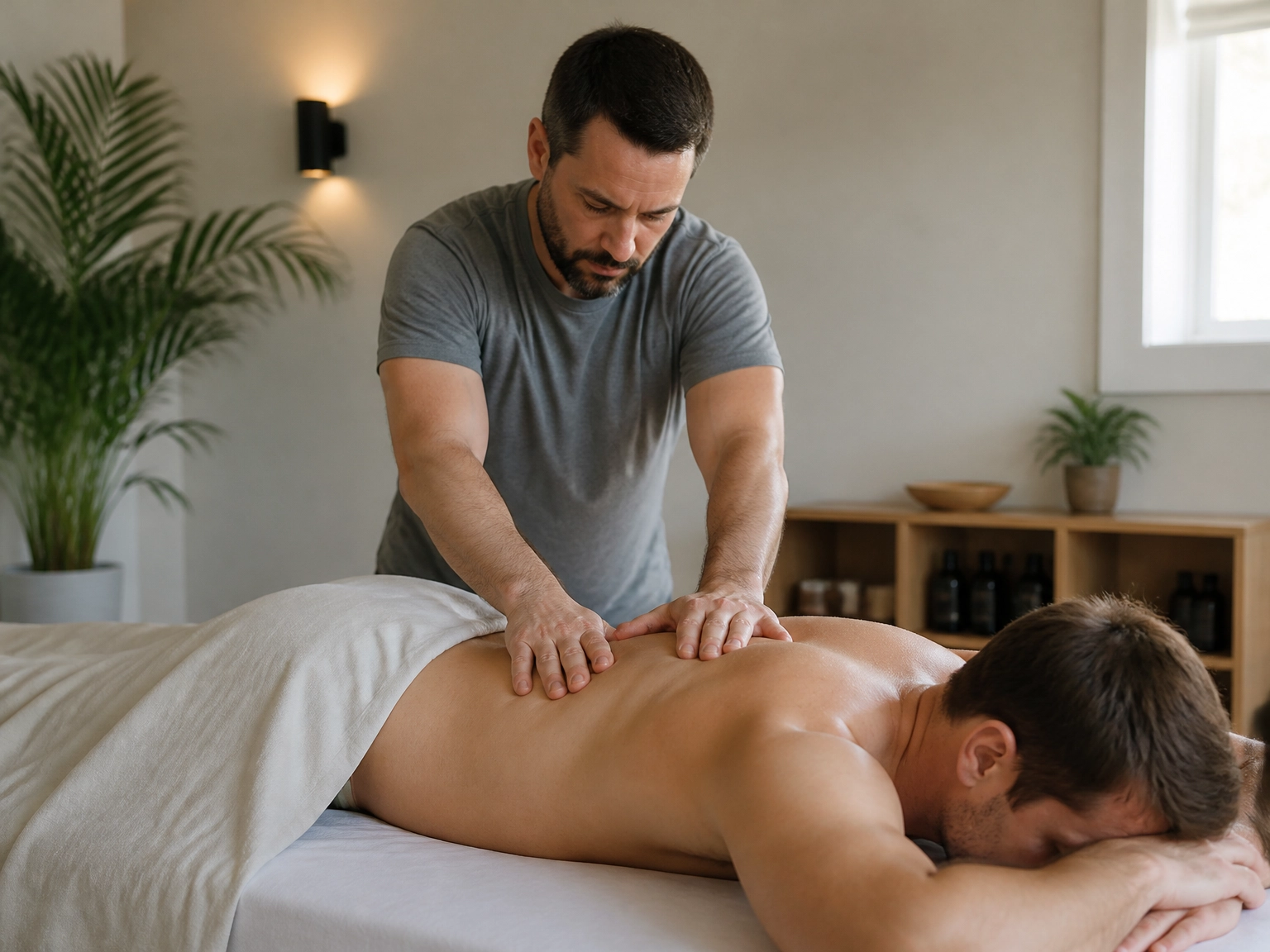
In a typical therapeutic session you undress to your comfort level, stay draped except for the area being worked, and give feedback on pressure. Therapists adjust pressure, positioning, and draping when you report discomfort, so speak up early.
Match modality, duration, and pressure to your goal: sports or deeper work for training recovery, lighter sessions for stress relief, sensual work for a different experience entirely.
Each listing describes its own offerings, so filter by listed styles rather than assuming a provider does everything. Style also shapes draping, touching, and conversation, which is why clarifying boundaries beforehand prevents awkwardness later. Those legal differences make licensing the next thing worth understanding.
Why State Licensing Matters for Male Bodywork
Style describes the session. Licensing describes the person. A valid license confirms a provider met a state's training, examination, and fingerprint background check requirements, none of which you can verify from an ad alone. For gay and M4M clients in particular, that lookup is the one step that separates a verified male bodywork provider from an anonymous listing.
Illinois shows how it works. Under the Massage Therapy Practice Act, applicants must be at least 18, complete 600 hours of training, pass an approved exam such as the NCBTMB or MBLEx, and submit fingerprints for state and FBI checks, per the state's 2026 sunset review. The state counts a substantial active licensed workforce, so there are real credentials to check.
The path costs money, between application and examination fees and tuition that can run into the thousands. Regulators cite the nature of the work. Because bodywork is hands-on and interpersonal, harm can result when physical boundaries are not respected, and the study notes that absent regulation, incidents of sexual misconduct could increase.
A license is a floor, not a guarantee. It confirms passed minimums, not good communication or boundary respect. Screen for both.
How Regulation Works: Licensing, Businesses, and Advertising
Licensing is only one layer. Rules split into three: therapist licensure, establishment rules for businesses and locations, and advertising restrictions, each potentially enforced by a different agency. For anyone booking male bodywork, the establishment layer is where a directory listing can be checked against something official rather than taken on trust.

Florida shows the pattern. The 2026 Chapter 480 index lists 480.043, covering establishment requisites, licensure, inspection, and human trafficking awareness training and policies, plus 480.0465, covering advertisement prohibitions (2026 Florida Statutes, Chapter 480). Check the operative text before relying on details.
Washington illustrates a second model: the Department of Health publishes therapist licensing requirements, and cities can add stricter rules, as Everett did for massage businesses in June 2026.
Florida is tightening rules around establishments, licensing, and advertising, and similar measures elsewhere tend to target how businesses operate rather than what clients prefer. A directory listing is not a substitute for checking a state board.
Verify in four steps: search your state board or health department lookup; confirm the name matches the provider; check the expiration date; and confirm the location is a licensed establishment where your state requires it.
Your Provider Vetting Checklist Before You Book
With the board lookup done, the checklist below turns verification into questions you can ask any provider.
The Five Checks
Verify identity first. Confirm the provider's full name and license number, then match both against your state's public lookup. Confirm the photo or profile matches the person you will meet.
Read the listing for specifics. Note stated modalities, session lengths, in-call or out-call availability, the studio address or travel area, and any written screening, deposit, or cancellation policies.
Ask direct questions in your first message. Cover what is offered, what is not, how screening works, whether draping is standard, and how you can signal pressure or discomfort mid-session.
Watch communication quality. Prompt replies, calm answers to boundary questions, and no push to move off-platform before you are ready all signal a professional.
Treat red flags as disqualifying. No verifiable name, upfront payment through unusual channels, vague or shifting service descriptions, or refusal to put policies in writing.
Run every listing through these five checks before you commit.
In-Call and Out-Call: What the Terms Mean
Once your vetting checks pass, clarify where the session happens. In-call means you travel to the provider's studio or space. Out-call means the provider travels to your home, hotel, or another location you arrange.
Each has tradeoffs. In-call usually gives you a purpose-equipped room, table, linens, and oils already set up, and it simplifies the provider's logistics. Out-call trades that convenience for travel questions: setup quality, privacy, parking, and whether the provider's equipment is portable.
Before choosing, confirm availability for your area, travel policies and any radius limits, whether hotel visits are allowed, required lead time, and who supplies linens and oil. Ask about parking, entry, and building access for out-call.
Rates and terms are provider-specific, so confirm them in writing before you commit. Use the ProMasseurs directory to compare live listings by city and see which providers offer in-call, out-call, or both.
Boundaries, Consent, and Handling Problems
Whichever format you choose, agree on boundaries before the session starts. Say plainly what you want, what you do not want, and how you will signal discomfort, such as, "I'll say pause if I need a change." Clear expectations protect both people and reduce mid-session confusion.
Consent does not end at the handshake. Either person can pause, adjust, or stop at any point, without justification. To redirect a provider, use a short, neutral statement of preference: "I'd rather you focus on my shoulders." A professional treats that as normal and moves on.
If something feels wrong, end the session, get to a safe place, and follow up in writing with the provider or platform. Report to state licensing authorities or local police if you believe a law was broken.
Regulators have flagged the risk that unregulated bodywork can increase incidents of sexual misconduct when boundaries are not respected. Put those expectations in writing before you book.
Questions to Ask Before You Confirm a Session
Once your boundaries are stated, put the remaining questions in writing and ask for written answers.
Logistics: Confirm the exact start time and duration, the address or that the provider travels to you, parking or entry instructions, and the policy for early or late arrival. One college clinic's consent form, for illustration, treats arriving 15 minutes past the scheduled time as a no-show.
Session plan: Ask which modality will be used, the expected pressure level, areas of focus, and any region you want excluded.
Policies: Clarify screening requirements, deposit and cancellation terms, accepted payment methods, and whether you receive a receipt.
Comfort: Confirm draping practice, room temperature, music or quiet preferences, and whether you may bring a support person.
A written reply gives you a record of what was agreed, which matters if the session differs from the description.
Pricing, Deposits, and Payment Expectations
Ask what changes the rate: session length, modality, in-call versus out-call travel, your location, and add-ons like extended time or a specific technique. Rates are provider-specific, so confirm them in writing rather than relying on any general figure. Compare several live listings in the same metro area; local market rates are your only reliable benchmark.
For payment, prefer traceable methods, and get deposit and cancellation terms in writing before sending anything. Be cautious with unusual transfer methods or requests for full prepayment on a first session. A below-market rate paired with vague service descriptions is a warning sign, not a bargain.
Etiquette and What a Professional Session Looks Like
Once payment terms are settled, a professional gay massage session follows a predictable arc. Expect an intake conversation about goals, health conditions, and recent injuries, then undress only to your comfort level. Draping is standard in licensed therapeutic work, so you stay covered except for the area being treated. The provider works with periodic pressure check-ins, winds down, and may suggest hydration or stretching.
Arrive clean and on time, and respect the provider's space and time limits. Professionalism looks like a provider who explains the plan, asks about pressure, honors stated limits, and keeps conversation focused on the session. Licensed therapeutic work is generally documented through intake forms, treatment notes, or receipts, another sign of a legitimate practice. When you are ready to book, ProMasseurs city guides explain local booking norms.
Frequently Asked Questions About Gay Massage
Beyond etiquette, these are the most common questions.
Is gay massage legal?
Yes, when it is licensed massage therapy in a state that licenses the profession. Rules vary by state, and services outside licensed therapy may be restricted or prohibited, especially under advertising and establishment rules.
Do I need a license to offer it?
Providers do, at the state level. Illinois, for example, requires applicants to be 18 or older, complete 600 training hours, pass an approved exam, and submit fingerprint background checks.
How do I check a provider's license?
Start with your state board or health department lookup tool, then match the name and license number you were given and confirm the license is active and unexpired.
What if a provider crosses a boundary?
Stop the session, leave safely, document what happened in writing, and report to licensing authorities or police where appropriate.
Where can I find male masseurs near me?
Browse verified ProMasseurs listings by city rather than improvising a search on social platforms.
Takeaways for Your Next Booking
As you move from research to booking, keep these five checks in order.
Verify identity first. Look up the provider's name and license status in your state's lookup. That single check confirms training, exam, and background screening in one step.
Match the session to your goal. Then confirm modality, pressure, duration, and draping practice in writing before you commit.
Set boundaries before the session. Say what you want and do not want. Any pushback is a reason to cancel, not a topic for negotiation.
Read the listing for specifics. Review live listings in your city for rates and in-call or out-call availability, and book through verified directory pages rather than unverified ads.
Treat red flags as disqualifying. Save receipts, messages, and intake paperwork. Documentation is what you need if you ever have to report a problem.
Conclusion
Booking a gay or M4M massage should feel informed, not improvised. If anything feels off, stop, document, and report where appropriate. Your records and early questions protect both comfort and safety.
Run the license lookup before you book, and confirm everything else in writing before you commit.