What Is Male Massage and How Do You Pick a Provider?
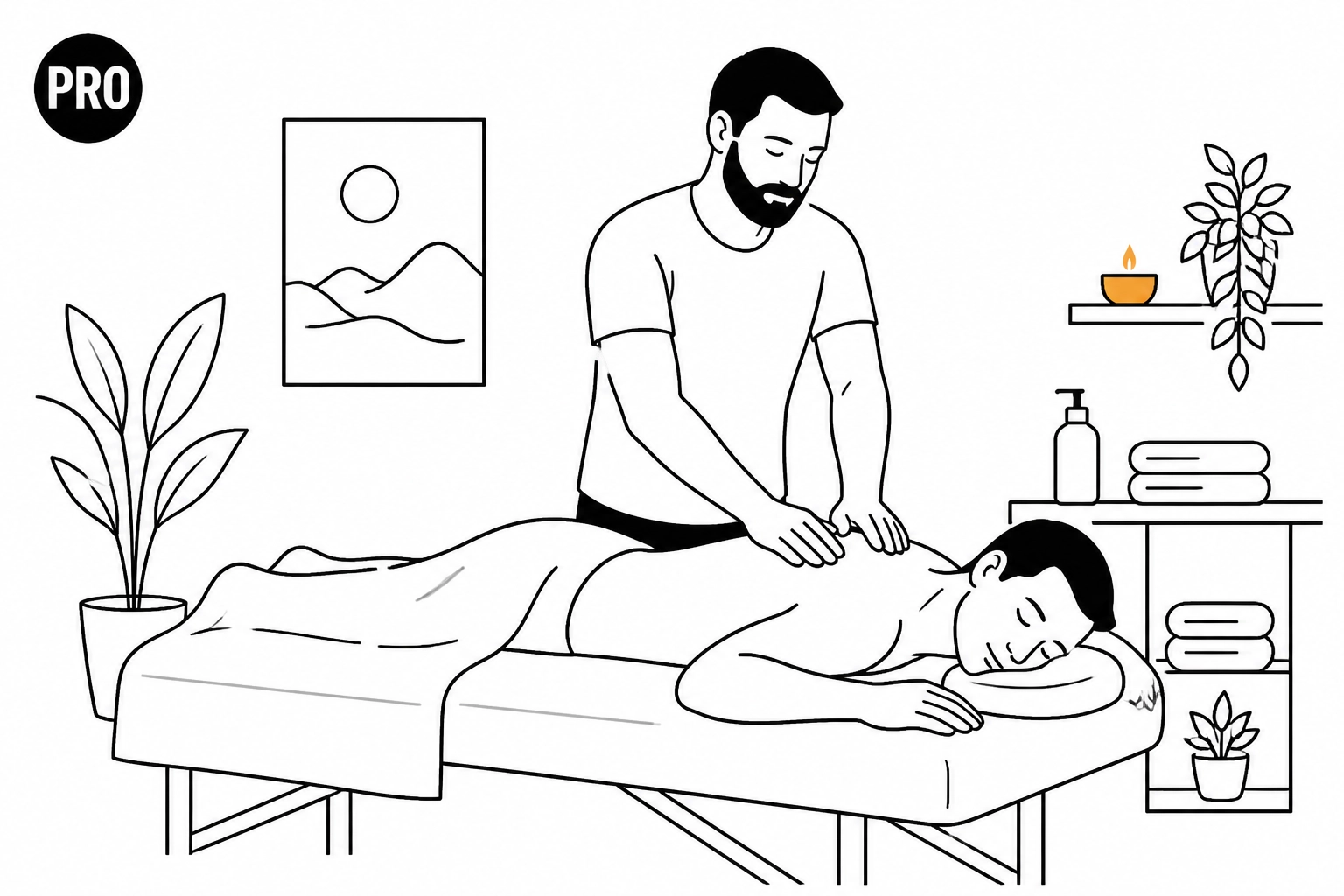
Learn what male massage and male bodywork cover, how licensing and title rules work, and how to check a provider before you book a session.
Booking a male massage should feel straightforward, but a quick search often raises more questions than it answers. What does the term actually mean? Who is qualified to call themselves a masseur or massage therapist? And how can you tell a reputable provider from a risky one before you pay a deposit? If you are new to this space, those questions are completely normal, and getting clear answers first will make your experience safer and more comfortable.
This guide walks you through the essentials step by step. You will learn what male massage and male bodywork actually cover, how regulation, licensing, titles and terminology vary by state, and how to verify a provider's credentials before you book. We also explain in-call versus out-call appointments and what common booking terms usually mean, followed by a simple checklist of questions to ask, tips for finding male masseur listings in your city, answers to frequently asked questions about male massage, and your next steps before booking. By the end, you will have a practical framework for choosing a provider with confidence.
What Male Massage and Male Bodywork Actually Cover
Male massage means a hands-on session performed by a male provider. In the gay and M4M market, it also describes a service marketed specifically to men who want a male practitioner. That is the plain definition, and it is often where the clarity ends.
Online, "male massage" gets used loosely. It can mean a relaxation-focused session, a deep tissue or sports-style treatment, or something in between. The phrase alone tells you nothing about the style, the setting, or the price. Two listings using identical words may describe very different sessions.
"Male bodywork" overlaps with it. That term is a broader label for hands-on modalities that work on muscles, and it appears in regulatory language as well. Some state boards oversee massage and bodywork therapy under that combined name. Treat the two terms as related rather than interchangeable.
This guide stays at the service level and keeps everything non-explicit. It covers what the category includes, how licensing and titles work, how to verify a provider, what to ask before booking, and where to look for listings. Explicit content is out of scope. If the terminology is new to you, what a typical session involves is a useful place to start.
Expect a text-led layout throughout. Any illustration would be a drawing in our existing orange-shapes style, with no photographs and no female figures.
Is Male Massage Regulated? Licensing, Titles and Terminology
Regulation depends on where the session happens, so start with the state. New York is a useful example because its rules are published plainly. NYSED defines massage therapy under Education Law Section 7801 as applying a scientific system of activity to the muscular structure of the human body by means of stroking, kneading, tapping, and vibrating, for the purpose of improving muscle tone and circulation (NYSED license requirements).
New York also ties specific words to credentials. NYSED states that any use of the title "massage therapist," "masseuse," "masseur," or any derivation of those titles within New York State requires licensure as a massage therapist (NYSED license requirements). That rule matters for a directory that uses the word "masseur" in its own name, because the word itself carries a licensing requirement in New York.
Scope: this section describes New York only. Other states set their own requirements for massage and bodywork, and no single national standard applies. If you book across state lines, check the rules of the state where the session takes place, not where you live.
For vocabulary, AMTA and FSMTB are industry bodies, not directories. FSMTB links to the MBLEx exam. Those names appear in credential discussions, but naming them says nothing about what any individual provider has completed.
One boundary: nothing here says a provider without a license is unsafe or acting illegally. It describes New York's licensing and title rules.
For how these terms get used in this market, see what an M4M session involves.
How to Check a Provider Before You Book
Licensing rules tell you what a title means in a given state. Verification tells you whether a specific provider holds that credential. Two lookup tools are worth knowing by name: FSMTB's "Look up a License" and NYSED's "Verifications & Certifications."
Check the rules of the state where the provider actually practices, not the state where you live. How far a record travels varies, and licensing authority often sits with states or even with city ordinances, so treat any single lookup as one part of the picture rather than the whole answer.
The New York State Education Department also warns that vishing scams impersonate state education department staff by phone to collect licensure and personal information, and its guidance is to provide nothing and contact the office directly to verify. Suspicious attempts can be reported to the FTC.
A practical rule: never hand over license numbers, ID documents, or payment details to someone who calls you first to "confirm" a booking. End the call, then reach the state office using contact details you look up yourself.
Keep your expectations of any listing realistic. A ProMasseurs listing is a starting point for browsing, not a credential check, and verification remains a step you take. Treat the state lookup as the part of the process that actually answers your question, and do it before money changes hands.
In-Call vs Out-Call and What Booking Terms Usually Mean
Verifying a provider is one task; reading the booking terms accurately is another.
Terminology is not standardized across the market. Listings use "in-call" and "out-call" inconsistently, so do not assume which arrangement applies to your booking. Use the questions below to get a clear answer before you commit.
Ask when a listing is vague:
Does this booking fall under in-call or out-call, and where will the session take place?
If the provider travels to you, how far do they travel, and is a travel fee added?
Is a deposit required, and how is it paid?
What are the cancellation and rescheduling terms?
Details a listing should state plainly: duration, rate, location type, and availability. Confirm each during the booking exchange rather than on the day of the session.
Location type is not only a convenience question. Some state rules distinguish a fixed, permanent location from a mobile vehicle facility when defining a massage establishment, so the setting a provider works from can be a regulated category in itself (Tennessee massage establishment rules, January 2026).
Treat a vague answer about money or location as a reason to keep asking, or to move on.
What to Ask Before You Book: A Simple Checklist
Once the in-call or out-call question is settled, work through these five checks before you commit. Treat this as ProMasseurs editorial guidance, not a guarantee about any provider.
Location and setting. Confirm which arrangement applies to your booking, the exact address area, and whether the space is private or shared with others.
Session detail. Ask about duration, the style and pressure offered, and whether the provider discusses your goals and problem areas before starting. In Georgia, for example, licensees must accurately explain the scope and limits of massage therapy, including contraindications.
Comfort and draping. Ask how draping is handled and what you can adjust if pressure or positioning is not working. You may request changes at any point; Georgia rules require a licensee to comply immediately with a request to refuse, modify, or stop treatment, regardless of prior consent (Georgia professional conduct rules).
Money and changes. Confirm the rate, any deposit, accepted payment methods, and the policy for rescheduling, arriving late, or canceling. Get the terms in writing before paying.
Boundaries and communication. Know how to state a preference, pause, or end a session. Read the provider's stated policies before you commit, and ask about anything unclear.
Work through the checklist before money changes hands, not on the day of your appointment.
Finding Male Masseur Listings in Your City
You've assembled your questions. Now you need names to ask them of. ProMasseurs is a US-focused directory and editorial site for gay and M4M massage and male bodywork, where readers can browse male masseur listings by city.
Start with your metro. Open the ProMasseurs city page for the metro where you plan to book. That page answers the practical question behind this whole guide: who is nearby, what each provider offers, and how the options compare. Skim the listings, shortlist two or three providers, then run the checklist above against each one before you reach out.
If your city isn't covered yet. Directory coverage grows over time, so a missing city page doesn't close the door. Use the ProMasseurs directory hub to see the full range of listings, or check the nearest larger metro if you're willing to travel for a session.
Whether you book this week or weigh options for a month, the order doesn't change: understand the category, confirm the title and licensing rules of the state involved, verify the provider, ask your questions, then commit. Begin with the city page for your metro, and the rest of the path is yours to walk.
Frequently Asked Questions About Male Massage
What does "male massage" mean?
A session given by a male provider, offered openly to men in the gay and M4M market. It does not by itself tell you the style, setting, or rate.
Do you need a license to call yourself a masseur?
It depends on the state. New York ties those titles to licensure, and other states set their own requirements, so check the rules of the state where the session takes place.
How can I check whether a provider is licensed?
Check the state where the provider actually practices, not the state where you live. Two tools to know by name: FSMTB's "Look up a License" and NYSED's "Verifications & Certifications."
What is the difference between in-call and out-call?
These booking terms describe where a session happens. Confirm the location terms directly with the provider before you book.
What should I do about a call claiming to be from a state licensing office?
Treat it as suspicious. Give no information, verify through the state office using contact details you look up yourself, and report the attempt to the FTC.
Your Next Steps Before Booking a Male Massage
The answers above settle the common questions. What remains is the order of operations, and it is worth running the same sequence every time.
First, ground yourself in the category: what male massage and male bodywork cover, and what they do not. From there, check the licensing and title rules for the state where the session takes place, not your home state, then verify credentials separately from browsing and settle your booking terms before paying.
Conclusion

Male massage and male bodywork are easiest to navigate when you keep a few things straight: know what the category covers, check licensing and title rules for the state where the session will happen, verify credentials separately from browsing listings, and settle your booking terms before paying.
Your next step is simple: browse ProMasseurs, starting with the city page for your metro. If your city is not covered yet, begin with the directory hub.