Massage Techniques
Deep Tissue vs Swedish Massage: Which One is Right for You?
Deep Tissue vs Swedish Massage: Which One is Right for You? Choosing between deep tissue and Swedish massage can be confusing. Both offer significant
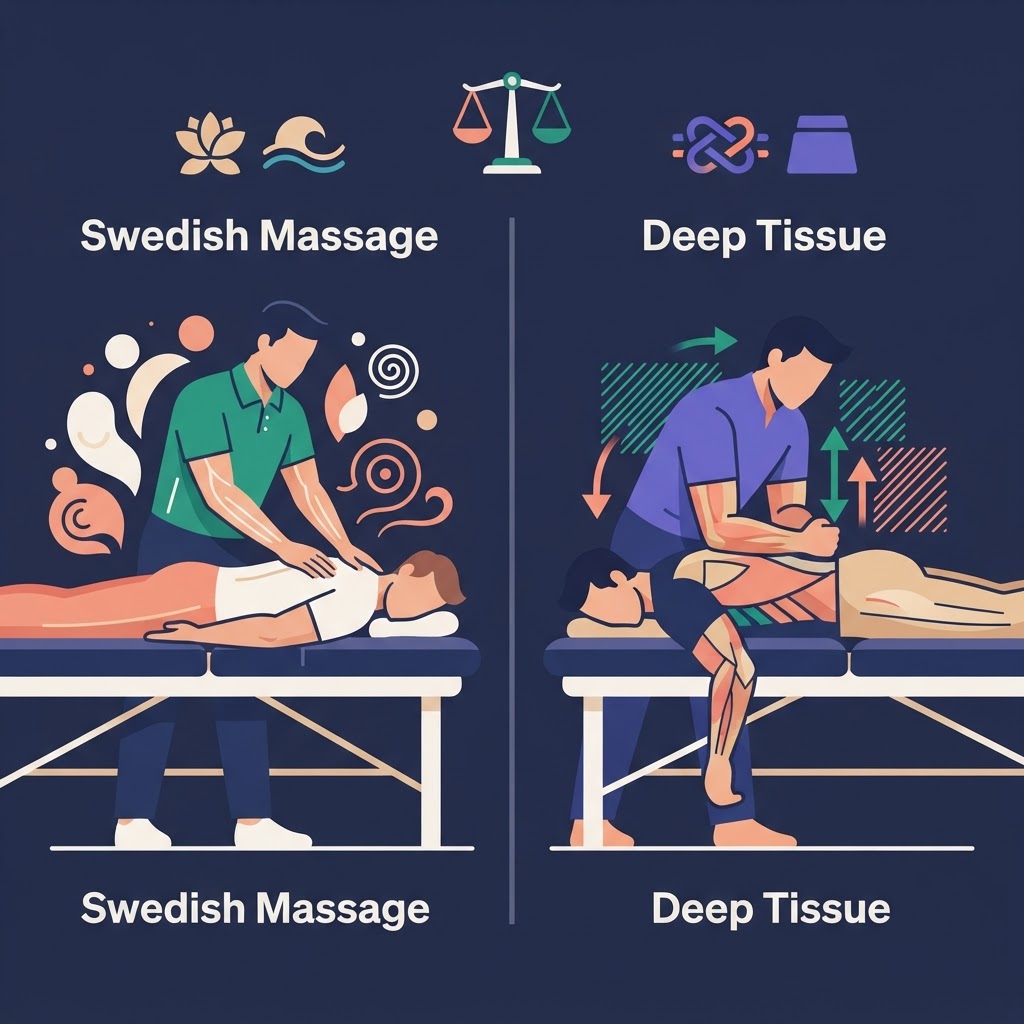
Deep Tissue vs Swedish Massage: Which One is Right for You?
Choosing between deep tissue and Swedish massage can be confusing. Both offer significant therapeutic benefits, but they serve different purposes and use distinct techniques. This comprehensive guide will help you understand the differences and choose the right massage style for your specific needs.
Understanding Swedish Massage
What is Swedish Massage?
Swedish massage is the most common and well-known massage technique in Western culture. Developed in the 1800s by Swedish physiologist Per Henrik Ling, this gentle approach focuses on relaxation and overall wellness.
Swedish Massage Techniques
Effleurage - Long, gliding strokes that warm up muscles and increase circulation
Petrissage - Kneading and rolling motions that work deeper into soft tissue
Friction - Circular movements that generate heat and break down adhesions
Tapotement - Rhythmic tapping that stimulates muscles and nerves
Vibration - Rapid shaking or vibrating movements for muscle relaxation
Benefits of Swedish Massage
Stress and Anxiety Reduction
- Lowers cortisol levels by up to 30%
- Increases serotonin and dopamine production
- Promotes mental clarity and relaxation
- Improves sleep quality
Physical Health Benefits
- Enhances blood circulation
- Boosts immune system function
- Increases flexibility and range of motion
- Reduces muscle tension and minor aches
Who Should Choose Swedish Massage?
Swedish massage is ideal for:
- First-time massage clients
- Those seeking general relaxation
- People with high stress levels
- Individuals with sensitivity to deep pressure
- Anyone wanting overall wellness maintenance
Understanding Deep Tissue Massage
What is Deep Tissue Massage?
Deep tissue massage targets the deeper layers of muscle and connective tissue (fascia). Using slow strokes and concentrated pressure, therapists address chronic muscle tension, injury recovery, and specific problem areas.
Deep Tissue Massage Techniques
Stripping - Deep, gliding pressure along muscle fibers using forearms, knuckles, or elbows
Friction - Pressure applied across muscle grain to break down adhesions
Trigger Point Therapy - Focused pressure on specific tight points that refer pain elsewhere
Myofascial Release - Sustained pressure to release fascial restrictions
Benefits of Deep Tissue Massage
Pain Management
- Reduces chronic back pain by 40-60%
- Alleviates neck and shoulder tension
- Treats repetitive strain injuries
- Addresses sports-related injuries
Muscle Recovery
- Breaks down scar tissue and adhesions
- Improves blood flow to injured areas
- Speeds post-workout recovery
- Enhances athletic performance
Posture Correction
- Releases chronic muscle patterns
- Corrects muscular imbalances
- Relieves computer/desk-related issues
- Addresses compensation patterns
Who Should Choose Deep Tissue Massage?
Deep tissue is best for:
- Athletes and active individuals
- Those with chronic pain conditions
- People recovering from injuries
- Individuals with specific problem areas
- Anyone with high pain tolerance
Key Differences Between Swedish and Deep Tissue
Pressure Intensity
Swedish Massage
- Light to medium pressure
- Gentle, flowing movements
- Comfortable for most people
- Rarely causes soreness
Deep Tissue Massage
- Medium to intense pressure
- Slow, deliberate strokes
- Can be temporarily uncomfortable
- May cause post-treatment soreness
Primary Goals
Swedish Massage Focuses On:
- Full-body relaxation
- Stress reduction
- Improved circulation
- General wellness
Deep Tissue Focuses On:
- Specific problem areas
- Chronic pain relief
- Breaking down adhesions
- Structural realignment
Treatment Duration
Swedish Massage
- Typically 60-90 minutes
- Full-body coverage
- Consistent pressure throughout
- Immediate relaxation
Deep Tissue Massage
- Usually 60-90 minutes
- Focused on problem areas
- May spend extended time on specific spots
- Results develop over multiple sessions
Pressure Level and Pain Tolerance
Swedish Massage Experience
- Feels soothing and gentle
- Little to no discomfort
- Relaxing throughout session
- Minimal post-session soreness
Deep Tissue Massage Experience
- Can involve "good pain" or therapeutic discomfort
- Pressure should never be unbearable
- Communication with therapist is crucial
- Post-session soreness lasting 24-48 hours is normal
Pain Scale Guidelines
Professional therapists use a 1-10 pain scale:
- 1-3: Light pressure (Swedish range)
- 4-6: Medium pressure (moderate Swedish to light deep tissue)
- 7-8: Deep pressure (therapeutic deep tissue)
- 9-10: Too much pressure (should be avoided)
Combining Swedish and Deep Tissue Techniques
The Best of Both Worlds
Many experienced therapists integrate both styles:
- Start with Swedish to warm up muscles
- Apply deep tissue to problem areas
- Finish with Swedish for relaxation
- Customized to individual needs
When Integration Works Best
- Chronic pain with high stress levels
- Athletic recovery with relaxation needs
- Specific injuries requiring attention
- Transitioning between massage styles
Cost Comparison
Swedish Massage Pricing
Average Rates:
- 60 minutes: $70-$120
- 90 minutes: $100-$170
- Often less expensive than specialized work
Deep Tissue Massage Pricing
Average Rates:
- 60 minutes: $90-$150
- 90 minutes: $130-$200
- Higher rates reflect specialized training
Frequency Recommendations
Swedish Massage Schedule
For Stress Management:
- Weekly or bi-weekly sessions
- Consistent maintenance approach
- Cumulative relaxation benefits
For General Wellness:
- Monthly sessions
- Preventive care focus
- Budget-friendly option
Deep Tissue Massage Schedule
For Chronic Pain:
- Weekly sessions initially
- Taper to bi-weekly for maintenance
- Gradual progress over 6-12 weeks
For Athletic Performance:
- Weekly during training seasons
- Bi-weekly during off-season
- Pre/post-event as needed
Finding the Right Male Massage Therapist
Specialization Matters
Look for therapists who:
- Clearly state their specializations
- Have advanced certifications
- Show experience with your concerns
- Offer free consultations
Reading Reviews and Testimonials
Pay attention to:
- Mentions of pressure levels
- Specific techniques used
- Results achieved
- Professional demeanor
- LGBTQ+ friendliness
Medical Considerations and Contraindications
When to Avoid Deep Tissue
- Recent surgery or injuries
- Blood clotting disorders
- Osteoporosis or bone conditions
- Pregnancy (first trimester)
- Certain medications (blood thinners)
When to Avoid Swedish Massage
- Active infections or fever
- Acute injuries
- Severe osteoporosis
- Recent surgery sites
Always Consult Your Doctor
Seek medical clearance for:
- Heart conditions
- Cancer or recent cancer treatment
- Blood pressure concerns
- Chronic health conditions
Making Your Decision
Choose Swedish Massage If:
✓ You're new to massage therapy ✓ You seek stress relief and relaxation ✓ You prefer gentle, soothing touch ✓ You want full-body treatment ✓ You have no specific pain concerns
Choose Deep Tissue Massage If:
✓ You have chronic muscle tension ✓ You're recovering from sports injuries ✓ You need focused problem-area work ✓ You can tolerate deeper pressure ✓ You want structural improvements
Consider a Consultation
Many male massage therapists offer:
- Free phone consultations
- Brief in-person assessments
- Customized treatment recommendations
- Combination approaches
Conclusion
Both Swedish and deep tissue massage offer valuable therapeutic benefits. Swedish massage excels at promoting relaxation and overall wellness, while deep tissue targets chronic pain and specific muscle issues.
The best choice depends on your goals, pain tolerance, and current physical condition. Don't hesitate to communicate with your male massage therapist about your needs - they can customize treatments to provide the perfect balance for your body.
Ready to experience the benefits? Find qualified male massage therapists near you on ProMasseurs and start your wellness journey today.
Illustrated guide to Deep Tissue vs Swedish Massage: Which One is Right for You?