Wellness Tips
Deep Tissue Massage vs Swedish Massage: Which Is Right for You?
Expert comparison of deep tissue and Swedish massage. Learn techniques, benefits, differences, and which massage type is right for your needs.
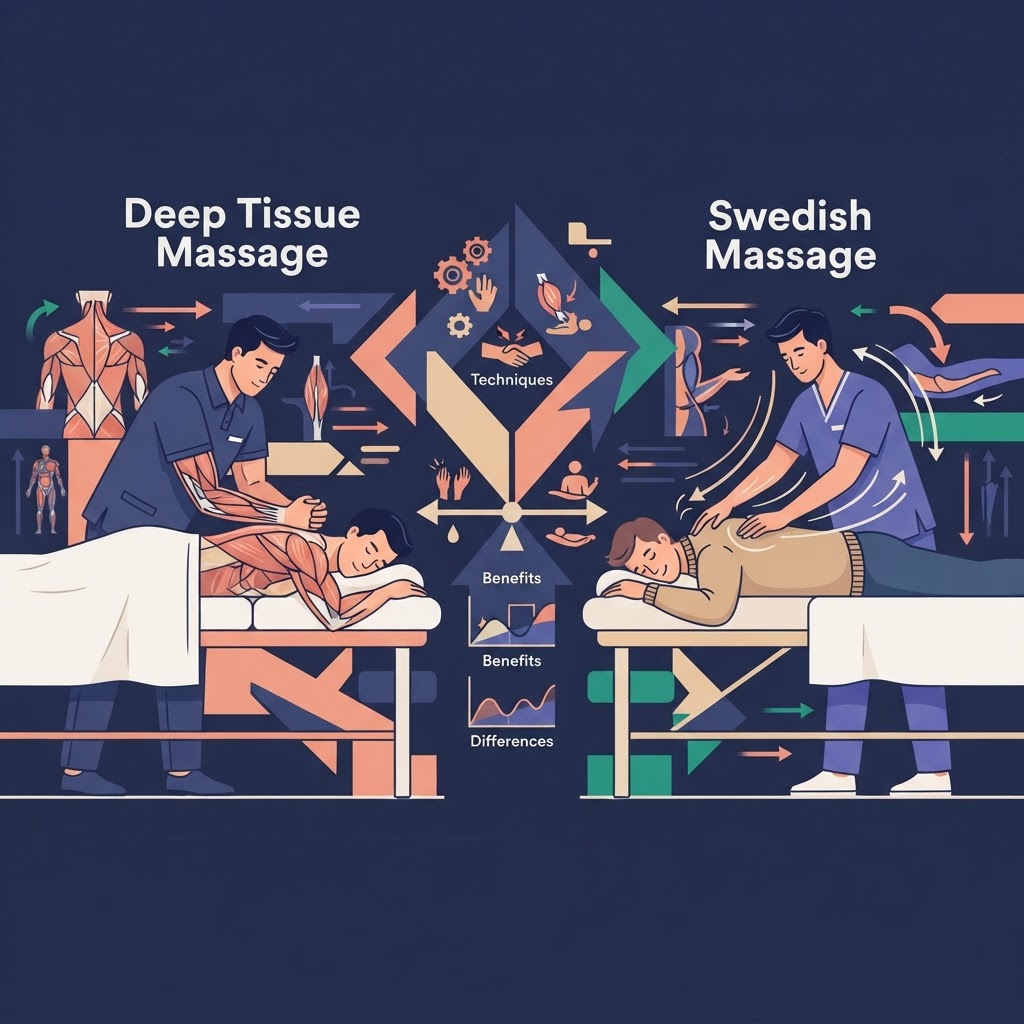
Deep Tissue Massage vs Swedish Massage: Which Is Right for You?
When booking a massage, understanding the difference between techniques helps you choose the right treatment for your needs. Deep tissue and Swedish massage are two of the most popular modalities, but they serve different purposes and provide distinct benefits.
What Is Swedish Massage?
Swedish massage is the most common and best-known type of massage in the Western world. Developed in the 1830s by Per Henrik Ling, this gentle technique focuses on relaxation and improved circulation.
Swedish Massage Techniques
Swedish massage incorporates five basic strokes:
- Effleurage: Long, gliding strokes along the length of body parts
- Petrissage: Kneading movements with hands, thumbs, and/or fingers
- Tapotement: Rhythmic tapping with cupped hands or fingertips
- Friction: Deep circular movements causing layers of tissue to rub against each other
- Vibration: Oscillatory movements that shake or vibrate the body
Benefits of Swedish Massage
- Stress Relief: Promotes full-body relaxation and mental calm
- Improved Circulation: Enhances blood flow throughout the body
- Flexibility: Gentle stretching increases range of motion
- Pain Reduction: Addresses minor aches and tension
- Better Sleep: Relaxation promotes deeper, more restful sleep
- Immune Boost: Regular massage supports immune system function
Who Should Choose Swedish Massage?
Swedish massage is ideal for:
- First-time massage clients
- Those seeking relaxation and stress relief
- People with light to moderate muscle tension
- Individuals sensitive to deep pressure
- Anyone wanting overall wellness maintenance
What Is Deep Tissue Massage?
Deep tissue massage targets the deeper layers of muscle and fascia (the connective tissue surrounding muscles). This technique uses slower strokes and more direct pressure applied across the grain of muscles.
Deep Tissue Massage Techniques
Deep tissue massage employs:
- Stripping: Deep gliding pressure along the length of muscle fibers
- Friction: Pressure applied across the grain of muscles
- Trigger Point Therapy: Focused pressure on tight muscle knots
- Myofascial Release: Sustained pressure into myofascial connective tissue
Benefits of Deep Tissue Massage
- Chronic Pain Relief: Effective for persistent muscle pain and soreness
- Sports Injury Recovery: Addresses athletic injuries and strain
- Improved Posture: Releases chronic muscle tension affecting alignment
- Scar Tissue Breakdown: Helps reduce adhesions from old injuries
- Lower Blood Pressure: Studies show potential cardiovascular benefits
- Stress Relief: Despite intensity, promotes significant mental relaxation
Who Should Choose Deep Tissue Massage?
Deep tissue massage is best for:
- Athletes and active individuals
- Those with chronic pain or specific problem areas
- People recovering from injuries
- Individuals with postural issues
- Anyone comfortable with firmer pressure
Key Differences Between Swedish and Deep Tissue Massage
Pressure Level
Swedish: Light to medium pressure using gentle, flowing strokes Deep Tissue: Firm to intense pressure targeting deep muscle layers
Primary Purpose
Swedish: Relaxation, stress relief, and general wellness Deep Tissue: Therapeutic treatment of chronic pain and specific issues
Pace and Technique
Swedish: Faster, rhythmic strokes covering the entire body Deep Tissue: Slower, focused work on problem areas
Physical Response
Swedish: Generally pain-free and immediately relaxing Deep Tissue: May cause some discomfort during treatment but provides lasting relief
Recovery Time
Swedish: No recovery needed; immediate relaxation Deep Tissue: May experience soreness for 1-2 days post-treatment
Can You Combine Both Techniques?
Many massage therapists blend Swedish and deep tissue techniques in a single session. This integrated approach:
- Warms up muscles with Swedish strokes
- Addresses problem areas with deep tissue work
- Finishes with relaxing Swedish techniques
- Provides both therapeutic and relaxation benefits
What to Expect During Each Type of Session
Swedish Massage Session
- Preparation: Undress to comfort level, lie on massage table
- Warm-Up: Therapist applies oil with gentle gliding strokes
- Full Body Work: Systematic treatment of all major muscle groups
- Relaxation: Continuous, flowing movements promote calm
- Duration: Typically 60-90 minutes
Deep Tissue Massage Session
- Consultation: Discuss specific pain points and problem areas
- Warm-Up: Brief Swedish strokes prepare muscles
- Targeted Work: Focused pressure on tight, painful areas
- Communication: Therapist checks pressure tolerance throughout
- Duration: Usually 60-90 minutes, sometimes longer for specific issues
Pain Levels and What's Normal
Swedish Massage
Should be completely comfortable with no pain. If you feel discomfort, the pressure is too firm for Swedish massage.
Deep Tissue Massage
Some discomfort is normal as the therapist works through tight areas. However:
- Sharp pain is never acceptable
- You should be able to breathe deeply
- Communicate if pressure is too intense
- Muscle soreness afterward is common but temporary
Choosing Based on Your Goals
Choose Swedish Massage If You Want To:
- Relax and de-stress
- Improve overall circulation
- Try massage for the first time
- Maintain general wellness
- Enjoy gentle, soothing touch
- Sleep better
Choose Deep Tissue Massage If You Want To:
- Address chronic muscle pain
- Recover from sports injuries
- Break up scar tissue
- Improve mobility and flexibility
- Treat specific problem areas
- Correct postural issues
Frequency Recommendations
Swedish Massage
- Monthly: Maintenance and stress management
- Bi-weekly: Moderate stress or tension
- Weekly: High stress or active lifestyle
Deep Tissue Massage
- Weekly: Active injury recovery
- Bi-weekly: Chronic pain management
- Monthly: Maintenance after issue resolution
Health Considerations and Contraindications
Both massage types may not be suitable if you have:
- Recent surgery or open wounds
- Severe osteoporosis
- Blood clotting disorders
- Active infections or fever
- Certain skin conditions
Deep tissue massage requires extra caution with:
- Recent injuries (wait until inflammation subsides)
- Pregnancy (first trimester especially)
- Cancer treatment (consult oncologist first)
- Severe cardiovascular conditions
Cost Comparison
Pricing is generally similar for both techniques:
- 60-minute session: $70-120
- 90-minute session: $100-180
- Location: Urban areas cost more than rural
- Experience: More experienced therapists charge higher rates
Deep tissue may cost slightly more ($10-20 extra) due to the physical demands on the therapist.
Tips for Your First Session
For Swedish Massage:
- Arrive early to relax
- Communicate pressure preferences
- Focus on breathing and letting go
- Drink water after
- Schedule evening appointments for best relaxation
For Deep Tissue Massage:
- Hydrate well before and after
- Be specific about problem areas
- Provide feedback on pressure
- Expect some post-session soreness
- Use ice if needed for any tender spots
Can You Switch Between Techniques?
Absolutely! Your needs may change:
- Try Swedish first to get comfortable with massage
- Progress to deep tissue as needed for specific issues
- Alternate based on your current needs
- Discuss preferences with your therapist
Finding the Right Therapist
Look for professionals with:
- Credentials: State license and relevant certifications
- Experience: Ask about their training in each technique
- Reviews: Read client testimonials
- Communication: Good therapists listen to your needs
- Specialization: Some excel at one technique over the other
The Bottom Line
Both Swedish and deep tissue massage offer significant benefits. Swedish massage excels at relaxation and stress relief, while deep tissue targets chronic pain and specific muscle issues. Many people benefit from both at different times or even combined in one session.
The best approach is to:
- Identify your primary goals
- Consider your pain tolerance
- Communicate openly with your therapist
- Try both techniques to see what works best
- Adjust based on your body's response
Remember, massage therapy is highly individualized. What works for someone else may not be ideal for you. Trust your body and work with a qualified therapist to create a treatment plan that addresses your unique needs.
Ready to experience professional massage therapy? Browse our directory of licensed therapists specializing in Swedish massage, deep tissue, and integrated techniques.
Illustrated guide to Deep Tissue Massage vs Swedish Massage: Which Is Right for You?