Industry News
Sports Massage for Athletes: Performance, Recovery, and Injury Prevention
Complete guide to sports massage for athletes. Learn how sports massage enhances performance, speeds recovery, and prevents injuries.
Sports Massage for Athletes: Performance, Recovery, and Injury Prevention
For athletes and active individuals, sports massage has become an essential component of training programs. This specialized form of bodywork enhances performance, accelerates recovery, and prevents injuries—making it a crucial tool for anyone serious about their athletic pursuits.
What Is Sports Massage?
Sports massage is a specialized therapeutic massage technique designed specifically for people involved in physical activity. Unlike relaxation massage, sports massage focuses on:
- Preventing and treating injuries
- Enhancing athletic performance
- Improving flexibility and range of motion
- Reducing recovery time
- Preparing muscles for intense activity
Origins and Evolution
Developed in the former Soviet Union and East Germany during the 1970s, sports massage has evolved into a sophisticated practice used by professional athletes worldwide. Today, it's a standard component of training for:
- Olympic athletes
- Professional sports teams
- Collegiate athletes
- Weekend warriors
- Fitness enthusiasts
- Anyone with an active lifestyle
Types of Sports Massage
1. Pre-Event Massage
Timing: 15-45 minutes before competition or training Duration: 10-30 minutes Pressure: Light to moderate Focus: Warming up muscles and mental preparation
Benefits:
- Increases blood flow to muscles
- Enhances flexibility
- Reduces pre-competition anxiety
- Improves mental focus
- Activates the nervous system
Techniques Used:
- Brisk, stimulating strokes
- Stretching and joint mobilization
- Compression to warm tissues
- Quick percussion movements
2. Post-Event Massage
Timing: Within 2 hours after activity Duration: 15-30 minutes Pressure: Light to moderate Focus: Recovery and relaxation
Benefits:
- Reduces delayed onset muscle soreness (DOMS)
- Removes metabolic waste products
- Promotes muscle recovery
- Identifies potential injury areas
- Provides psychological relaxation
Techniques Used:
- Gentle effleurage
- Light compression
- Passive stretching
- Lymphatic drainage techniques
3. Maintenance Massage
Timing: Between training sessions or competitions Duration: 30-90 minutes Pressure: Moderate to deep Focus: Overall muscle health and injury prevention
Benefits:
- Maintains muscle flexibility
- Identifies and treats tight areas
- Prevents small issues from becoming injuries
- Enhances overall performance
- Supports training intensity
Techniques Used:
- Deep tissue work
- Trigger point therapy
- Myofascial release
- Cross-fiber friction
- Stretching
4. Rehabilitation Massage
Timing: During injury recovery Duration: 30-60 minutes Pressure: Varies based on injury stage Focus: Healing and restoring function
Benefits:
- Speeds healing process
- Reduces scar tissue formation
- Restores range of motion
- Manages pain
- Prevents compensation patterns
Techniques Used:
- Gentle mobilization
- Scar tissue work
- Specific strengthening exercises
- Progressive loading
- Functional movement patterns
Performance Enhancement Benefits
Improved Flexibility
Sports massage increases muscle and joint flexibility through:
- Breaking down adhesions
- Lengthening muscle fibers
- Improving tissue elasticity
- Enhancing joint mobility
- Releasing fascial restrictions
Result: Better range of motion and more efficient movement patterns
Enhanced Power Output
By optimizing muscle function, sports massage contributes to:
- Better muscle contraction
- Improved coordination
- Faster muscle firing
- Enhanced proprioception
- Optimal muscle length-tension relationships
Result: More powerful and efficient athletic movements
Increased Endurance
Regular sports massage supports endurance by:
- Improving circulation
- Enhancing oxygen delivery
- Removing metabolic waste
- Reducing energy waste from muscle tension
- Supporting better recovery between sessions
Result: Ability to train harder and longer
Recovery Acceleration
Reduced Muscle Soreness
Research shows sports massage significantly reduces DOMS by:
- Flushing out lactic acid and other metabolites
- Reducing inflammation
- Improving blood flow
- Activating the parasympathetic nervous system
- Decreasing muscle tension
Timeline: 30-50% reduction in soreness when done within 2 hours post-exercise
Faster Healing
Sports massage accelerates recovery through:
- Increased nutrient delivery to muscles
- Enhanced waste removal
- Reduced inflammation
- Improved tissue repair
- Better sleep quality
Result: Ability to return to training sooner
Fatigue Reduction
Athletes report decreased fatigue through:
- Better sleep quality
- Reduced physical stress
- Improved mental recovery
- Enhanced parasympathetic activity
- Lower cortisol levels
Injury Prevention
Early Problem Detection
Regular sports massage helps identify:
- Muscle imbalances
- Developing trigger points
- Areas of excessive tension
- Restricted movement patterns
- Compensation patterns
Benefit: Address issues before they become injuries
Muscle Balance
Sports massage maintains optimal muscle balance by:
- Releasing overactive muscles
- Identifying weak areas needing strengthening
- Correcting length-tension imbalances
- Improving movement patterns
- Supporting proper biomechanics
Flexibility Maintenance
Consistent flexibility through sports massage:
- Reduces strain on joints
- Improves movement efficiency
- Decreases injury risk
- Enhances performance
- Supports proper alignment
Common Athletic Injuries Treated
Runner's Knee (Patellofemoral Pain Syndrome)
Treatment Approach:
- IT band release
- Quadriceps work
- VMO strengthening support
- Hip stabilizer treatment
- Gait analysis support
Shin Splints
Treatment Approach:
- Anterior tibialis release
- Calf muscle work
- Fascial release
- Proper training advice
- Footwear assessment
Tennis Elbow
Treatment Approach:
- Forearm muscle release
- Trigger point therapy
- Cross-fiber friction
- Stretching protocols
- Movement pattern correction
Hamstring Strains
Treatment Approach:
- Gentle lengthening work
- Scar tissue management
- Progressive loading
- Eccentric strengthening support
- Return-to-sport protocols
Rotator Cuff Issues
Treatment Approach:
- Shoulder girdle release
- Postural correction
- Scapular stabilization support
- Range of motion work
- Strengthening progressions
Sport-Specific Applications
Running and Endurance Sports
Focus Areas:
- Lower leg muscles
- IT band
- Hip flexors
- Glutes
- Lower back
Recommended Frequency: Weekly during training, twice weekly before major events
Strength Training
Focus Areas:
- Primary movers for specific lifts
- Opposing muscle groups
- Core stabilizers
- Joint mobility
- Fascial release
Recommended Frequency: Bi-weekly for serious lifters
Team Sports (Soccer, Basketball, Football)
Focus Areas:
- Lower body power muscles
- Core and trunk
- Shoulders and arms
- Ankle and foot
- Injury-prone areas
Recommended Frequency: Weekly during season
Swimming
Focus Areas:
- Shoulders and rotator cuff
- Lats and back
- Hip flexors
- Core
- Neck and upper traps
Recommended Frequency: Twice monthly during heavy training
Cycling
Focus Areas:
- Quads and hamstrings
- Hip flexors
- IT band
- Lower back
- Neck and shoulders
Recommended Frequency: Weekly for competitive cyclists
Integrating Sports Massage Into Training
Building a Schedule
Off-Season:
- Monthly maintenance sessions
- Address any lingering issues
- Focus on overall conditioning
- Prepare for upcoming season
Pre-Season:
- Bi-weekly sessions
- Support increasing training load
- Prevent overuse injuries
- Optimize performance preparation
In-Season:
- Weekly maintenance
- Pre-event when beneficial
- Post-event recovery
- Injury management as needed
Post-Season:
- Recovery-focused sessions
- Address accumulated issues
- Support rest and regeneration
- Transition to off-season training
Working With Your Therapist
Communication Is Key:
- Share training schedule
- Discuss upcoming events
- Report any pain or discomfort
- Provide feedback on pressure
- Update on performance changes
Collaborative Approach:
- Therapist should understand your sport
- Integrate with other healthcare providers
- Align treatment with training phases
- Adjust techniques based on needs
- Track progress over time
Self-Care Between Sessions
Foam Rolling
- Daily light rolling for maintenance
- Focus on commonly tight areas
- Avoid rolling acute injuries
- Use proper technique
- 5-10 minutes per session
Stretching
- Dynamic stretching before activity
- Static stretching after workouts
- Focus on problem areas
- Hold stretches 30-60 seconds
- Breathe deeply during stretches
Ice and Heat
- Ice for acute injuries (48-72 hours)
- Heat for chronic tension
- Contrast therapy for recovery
- Always protect skin
- 15-20 minutes per application
Hydration and Nutrition
- Drink plenty of water
- Adequate protein for recovery
- Anti-inflammatory foods
- Proper micronutrient intake
- Post-workout nutrition timing
Finding the Right Sports Massage Therapist
Essential Qualifications
- Licensed massage therapist
- Sports massage certification
- Experience with your sport
- Understanding of biomechanics
- Knowledge of injury management
Questions to Ask
- What's your experience with [your sport]?
- How do you approach pre/post-event massage?
- Do you work with other athletes?
- Can you coordinate with my coach/trainer?
- What's your injury management philosophy?
Red Flags
- No relevant certifications
- One-size-fits-all approach
- Doesn't ask about training
- Promises unrealistic results
- Poor communication
Cost and Investment
Typical Pricing
- 30-minute session: $40-70
- 60-minute session: $80-130
- 90-minute session: $120-200
- Pre/post-event: $50-100
Package Deals
- Monthly packages: 10-20% discount
- Season passes: Up to 30% savings
- Team rates: Negotiable discounts
- Student athlete rates: Often available
Insurance Coverage
Some insurance plans cover sports massage when:
- Prescribed by a physician
- Part of injury rehabilitation
- Coded as medical massage
- Provided by licensed therapist
The Bottom Line
Sports massage is a proven tool for athletes at all levels. Whether you're training for the Olympics or your first 5K, regular sports massage can:
- Enhance your performance
- Speed recovery between workouts
- Prevent injuries before they occur
- Address issues before they become serious
- Support your overall training program
The key is consistency. While occasional massage provides benefits, regular sessions integrated with your training schedule deliver the best results.
Ready to take your athletic performance to the next level? Browse our directory of certified sports massage therapists experienced in working with athletes in your sport.
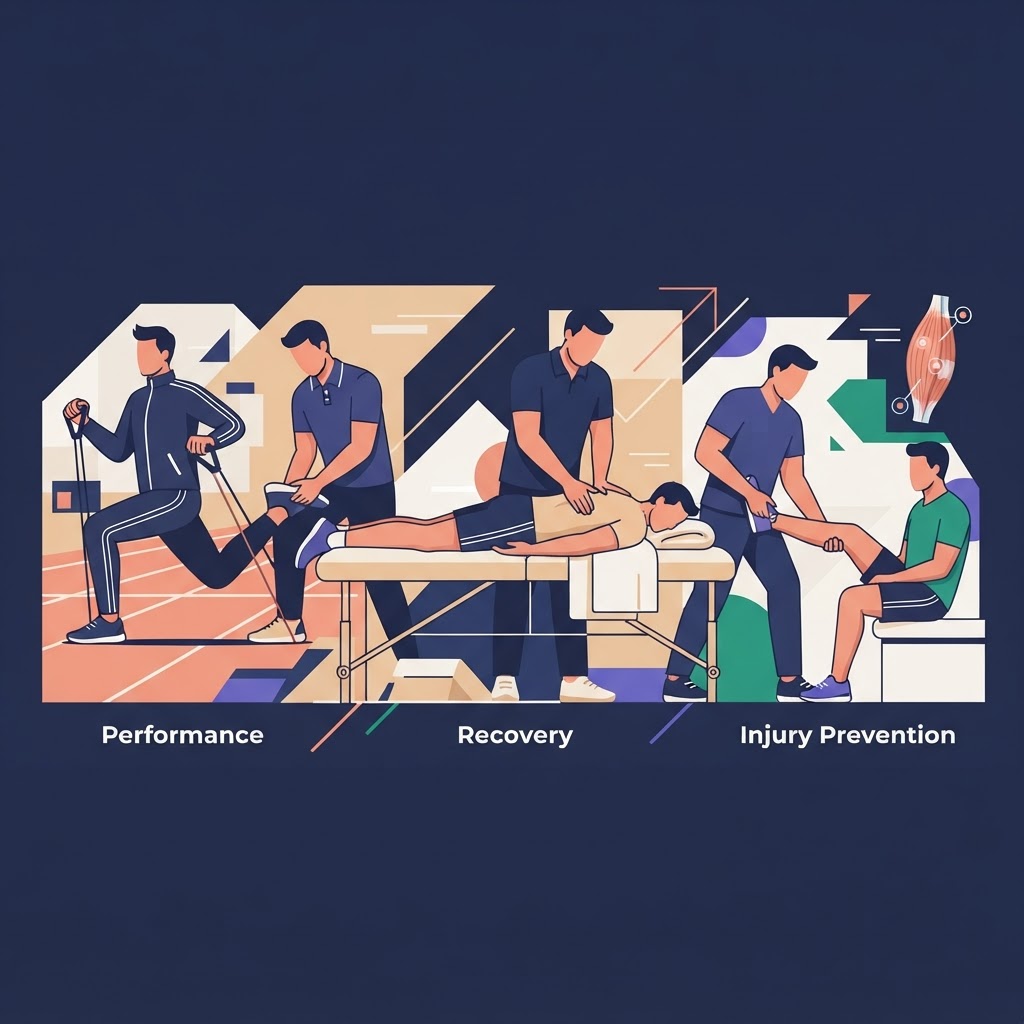
Illustrated guide to Sports Massage for Athletes: Performance, Recovery, and Injury Prevention